Top, new and themed collections answer different questions
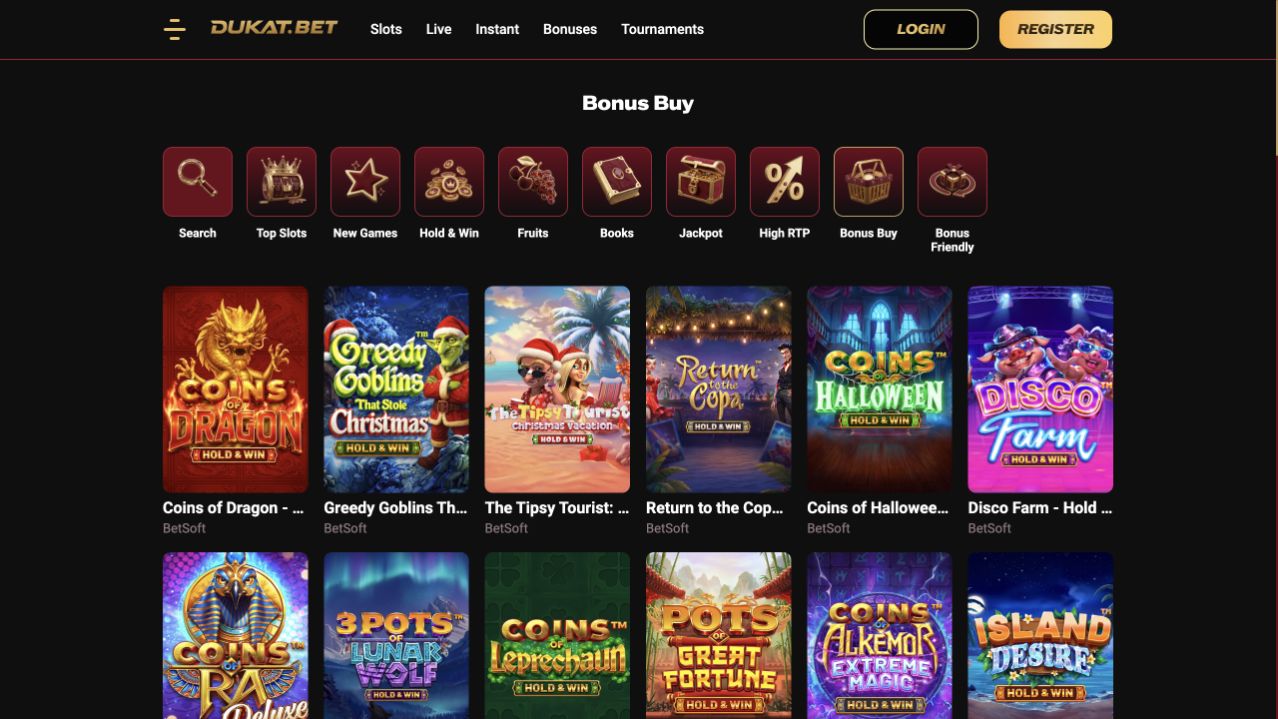
Top Slots is useful for a compact featured selection; New Games is a release-discovery route. Fruits and Books group presentation themes, while Hold & Win groups a recognisable feature family. Jackpot highlights a prize-related format, and High RTP is a catalogue label that still requires an in-game configuration check. Bonus Friendly should be treated as a shortlist to compare against the selected promotion’s eligible-game rules, not as permission for every bonus. Current reference: explore Dukat.bet.
Books: a visual theme is not one shared ruleset
The Books collection included Book of Gold Multichance, Book of Egypt, Book of Light, Books of Giza, Book of Sun: Multichance, Book of Cats and Book of Cats Megaways. Some names refer to a feature, while others primarily describe the theme. A book symbol can have different roles across studios. Check whether it is a wild, scatter, trigger or something else, and whether a feature uses fixed lines or a changing reel structure.
Fruits and High RTP are very different browsing labels
Fruit Towers, Fruit Story, Magic Apple, Alien Fruits and Miss Cherry Fruits appeared in the fruit-themed collection. The High RTP page, by contrast, included table-game examples such as Texas Hold’em, Multihand Blackjack, Single Deck Blackjack and Blackjack Surrender. This matters because a mathematically oriented collection is not necessarily a list of slots. For blackjack and poker-style formats, published theoretical returns can depend on rules and decisions; they cannot be compared to a slot percentage without that context.
Three broad families answer different needs
Slots normally resolve a paid round through a defined symbol system. Live-table formats use the rules of the selected table, sometimes with a streamed presentation. Instant-game categories can involve a multiplier, a sequence of reveals or another short-round format. The pace and controls differ, so the same preparation checklist is not sufficient for every family.
The observed instant menu includes Crash, Plinko, Mines, Dice & Hi-Lo and arcade categories. The live navigation includes roulette, baccarat, blackjack and game shows. These are browsing labels, not proof that every item under a live heading uses a human dealer or that every instant game shares one return model.
Mechanic labels can overlap
Hold & Win, Megaways and Bonus Buy describe different aspects of a slot. One concerns a respin-style feature, another a variable-ways system, and another access to a purchased mode. A title can belong to more than one category. That overlap does not make the filters contradictory.
High RTP is another browsing signal, but the exact percentage belongs to the loaded configuration. A provider’s headline figure and a catalogue label should not replace the actual help-panel check. The game guides explain seven titles individually instead of treating all catalogue tiles as interchangeable.
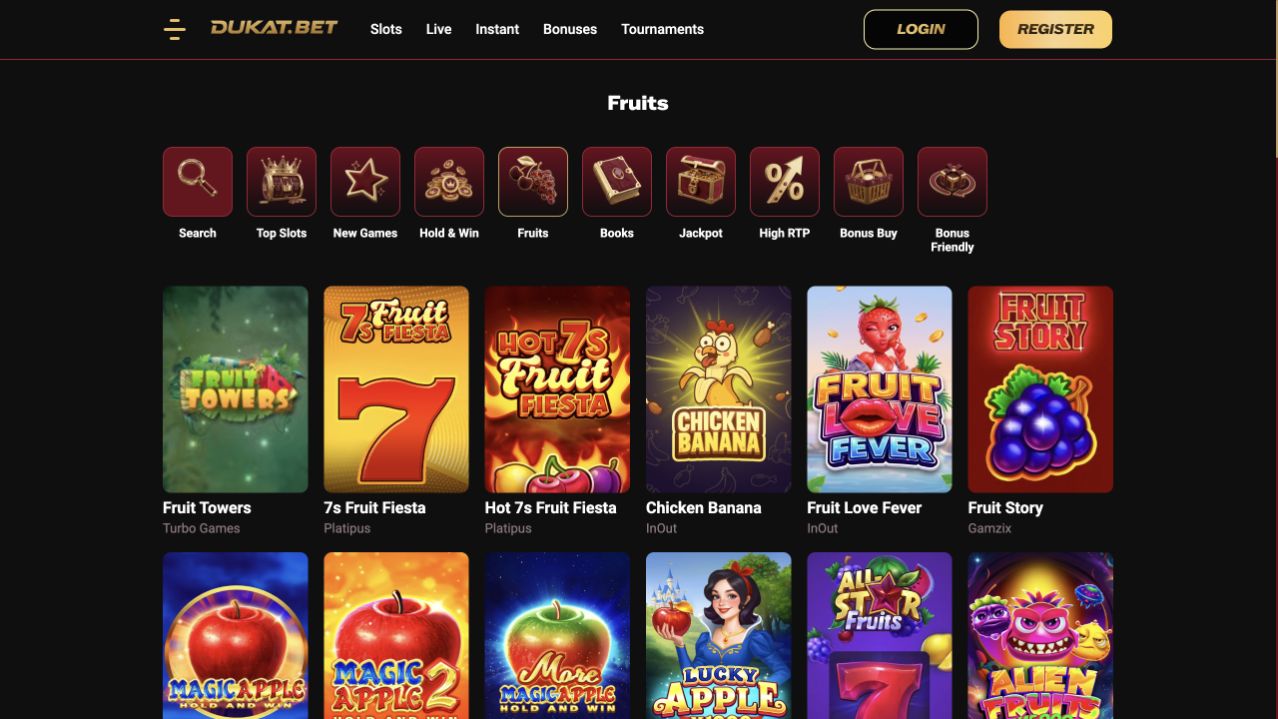
Use the title and provider together to identify a game. Open its help panel for the active RTP, stake range and feature rules; the catalogue thumbnail does not provide these details.
Move from a category to a specific rules question
After finding a title, identify the provider, total stake and rule panel. Ask how a win is formed, what ends the round and whether a visible option adds cost. If a promotion is active, check its eligible-game list separately.
The category directory is a discovery tool, not a ranking of expected profit. The most useful choice is a format whose rules and costs are clear to you within the budget already set.
The percentage applies to accumulated stakes
RTP is a theoretical return measure within a game's mathematical model. In a hypothetical 96% model, €10,000 of accumulated stakes corresponds to €9,600 of expected return over the model's interpretation. This is not a promise to someone depositing €10,000 and not a forecast of a €400 loss in one session. Accumulated stakes can include funds won and wagered again, so turnover and deposit are different quantities.
A short session can depart substantially from the theoretical expectation. The result of one round does not need to resemble the advertised percentage. A player who receives no payout from a small set of spins has not, on that observation alone, measured the game's RTP. Establishing a configuration is a question about the game's rules and supplier specification, not a handful of personal outcomes.
A title can exist with more than one configuration
The verified Hacksaw reference pages list multiple RTP variants for several games in our catalogue. Wanted Dead or a Wild lists 96.38%, 94.55%, 92.33% and 88.42%; Le Bandit lists 96.34%, 94.23%, 92.17% and 88.36%. These are manufacturer references. We have not established which configuration is assigned to every Dukat account or game session.
Use the actual help or paytable for the opened game and retain its full title and version. A sequel, alternative mode or feature purchase may have separate information. If the interface does not expose a verifiable number, mark the configuration as unconfirmed rather than assume the largest provider-listed value. The same studio name does not make two releases mathematically identical.
RTP and volatility answer different questions
RTP concerns a long-run theoretical average; volatility concerns the distribution of results. Two games can have a similar theoretical return and very different short-session experiences. Hit frequency is another measure and can count payments smaller than the stake. A frequent win animation is therefore not evidence that a session is profitable.
Use RTP as one comparison field alongside mechanics, total stake, feature rules and personal limits. A higher published figure does not remove the possibility of losing the whole planned budget. The volatility guide develops the distribution question, while individual game reviews identify the provider source and explicitly separate it from an unverified operator setting. Current reference: view the current offer.
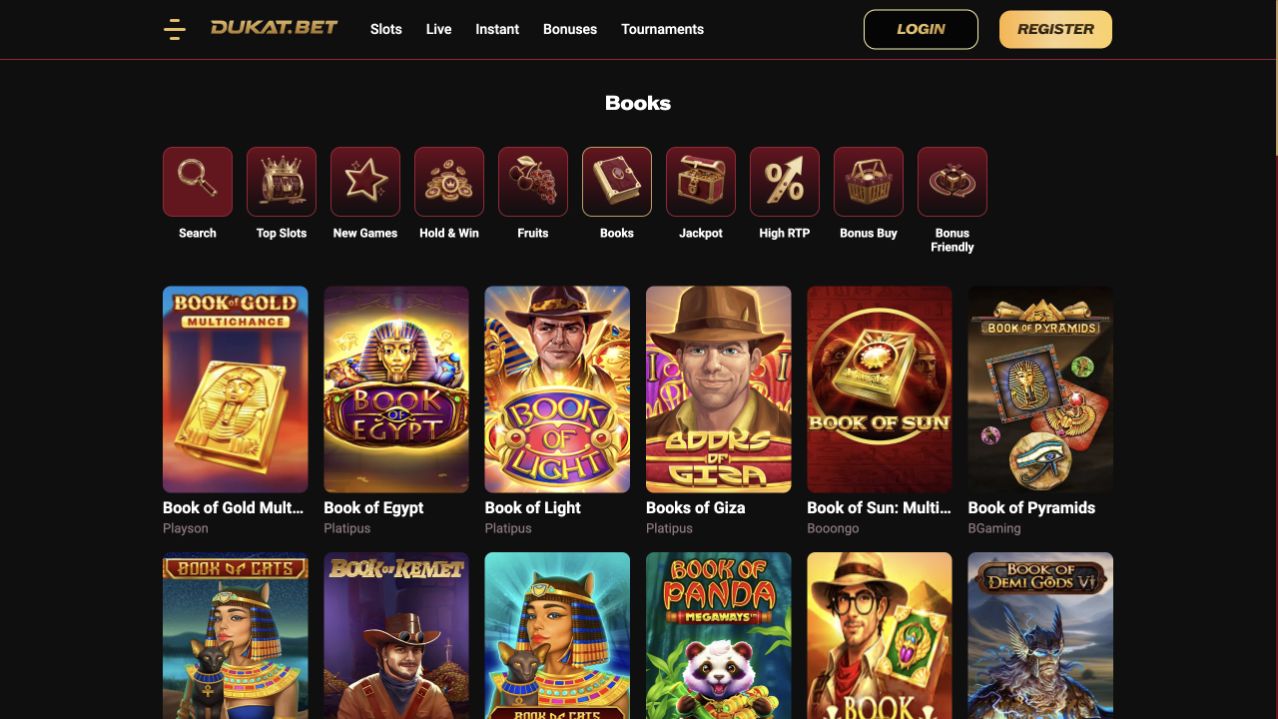
Use the title and provider together to identify a game. Open its help panel for the active RTP, stake range and feature rules; the catalogue thumbnail does not provide these details.
A numerical example explains the scale
At 96% theoretical RTP, a mathematical model returns an average of €96 for each €100 of total stakes over a very large sample under that configuration. The €100 refers to turnover, not necessarily a single €100 deposit. Reusing winnings creates additional turnover. A player can therefore generate substantially more total stakes than the starting balance without making another deposit, and can still finish with no funds.
This distinction also explains why comparing RTP with a bank interest rate is misleading. RTP does not promise growth of a balance, and a short session need not resemble the theoretical average. A difference between 96% and 94% is a difference between models, not a two-euro adjustment guaranteed for every hundred euros in one session. Verify the precise mode as well: a separately configured feature purchase may have a separately published return.
Volatility is about the spread of outcomes
A volatility description helps characterise how a game's returns are distributed. A game can concentrate more of its theoretical return in less frequent larger events or distribute it differently through ordinary rounds. The label does not tell you when a large win will occur. It also does not establish that a high-volatility game is better or worse for every visitor; the relevant issue is whether its behaviour is understandable and compatible with a limited budget.
Provider scales are not universal. A score of three out of five from one studio should not be treated as numerically identical to a “medium” label from another. Our game references retain the source's own scale where it is explicitly published. Where a reliable rating is absent, we do not infer one from artwork, a maximum-win headline or a popular description.
Hit frequency does not equal profitable-round frequency
A game may count any qualifying payout as a hit, including a payment smaller than the total stake. For a hypothetical €1 round that pays €0.30, the interface can show a win while the net movement is minus €0.70. Understanding the difference prevents frequent animations from being mistaken for positive session performance.
Feature frequency is separate again. A bonus may trigger infrequently but pay a range of results once triggered. A paid feature purchase changes the entry cost and cannot be compared with a normal spin by looking only at the base-stake display. Check which mode a published statistic describes before comparing numbers.
Use the information to set expectations, not to chase a result
A run without a feature does not prove that the next round is due to deliver one. Past outcomes do not create a repayment obligation. Increasing the stake because a game feels “ready” confuses a description of distribution with a prediction. Set the budget and stopping point independently of that impression.
When choosing between titles, compare mechanics, total round cost and available information alongside volatility. If a game's explanation is unclear, that uncertainty is itself useful information. Our RTP guide covers averages; the game reviews explain features. Keeping those questions separate is more accurate than combining them into a single unsupported “best payout” ranking.
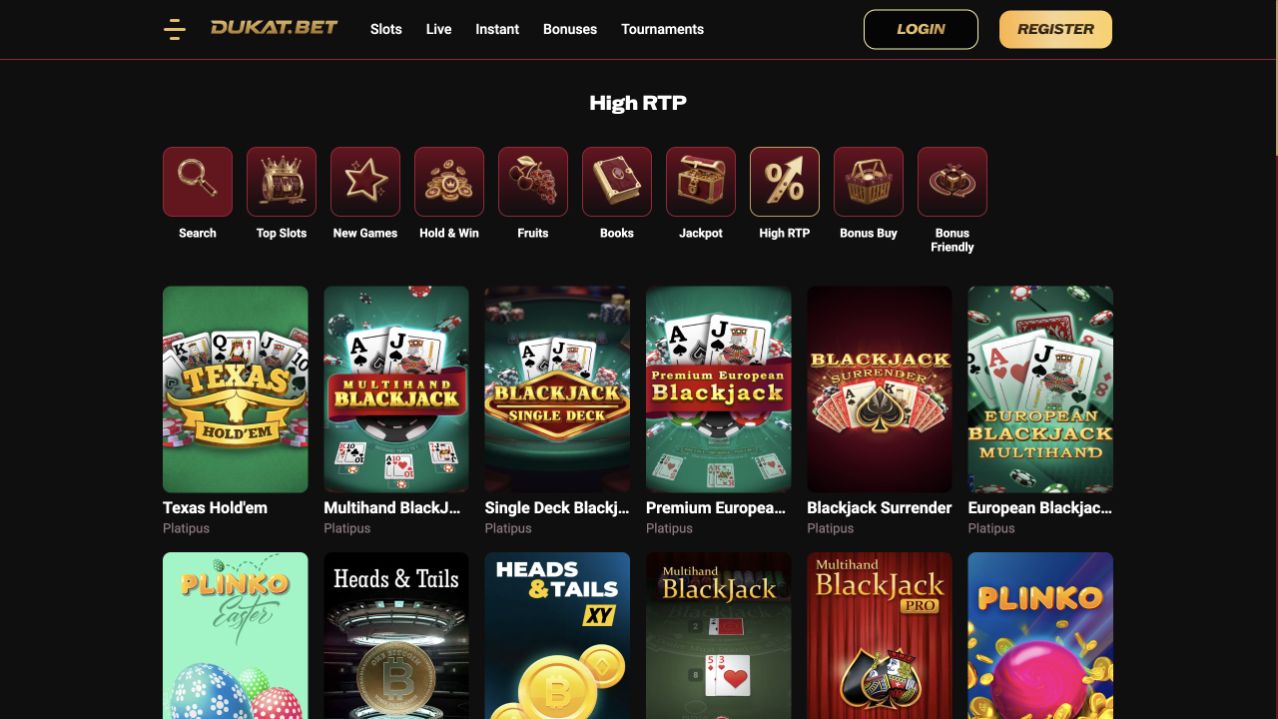
Use the title and provider together to identify a game. Open its help panel for the active RTP, stake range and feature rules; the catalogue thumbnail does not provide these details.
Two games can share RTP and feel very different
Imagine two fictional games with the same theoretical return. One distributes more of its return through relatively frequent small outcomes; the other concentrates more of it in rare, larger outcomes. The shared RTP does not make their session patterns interchangeable. This example explains distribution, not an assurance that either game will produce the described pattern during a particular visit.
Provider ratings such as 3/5 and High are not a universal measurement standard. A 3/5 label from one studio cannot reliably be ranked against a Medium label from another without knowing both methodologies. Our game table keeps the original provider wording and leaves unconfirmed fields unfilled. Frequency of wins, feature frequency and volatility are related ideas but not synonyms: a small payout below the stake can count as a hit while still reducing the balance.
Buying entry does not buy a successful outcome
A Bonus Buy option charges a stated amount to enter a feature under that game's rules. It does not guarantee a profitable result from the feature. The purchase can cost many multiples of the displayed base stake, so the total price deserves more attention than the small denomination selected for an ordinary spin.
For a hypothetical feature priced at 100 times a €0.20 base, the cost is €20. This is a teaching example rather than a Dukat price. Compare any resulting payment with €20, not €0.20, when assessing the net outcome. Different purchase options within the same game can have different entry conditions and costs.
Read what the purchase changes
The option may enter a particular bonus mode, guarantee a trigger or offer a choice between feature variants. Read the description before assuming it reproduces every aspect of a naturally triggered round. If the rules publish separate statistical information for the purchased mode, keep that information associated with the mode instead of applying it to the whole game.
An enhanced-chance or ante option is not necessarily a feature purchase. It can increase the ordinary round cost while leaving the trigger uncertain. The names vary by title, so identify the actual action and final charge. A colourful button is not a sufficient explanation of either. Current reference: check the operator’s rules.
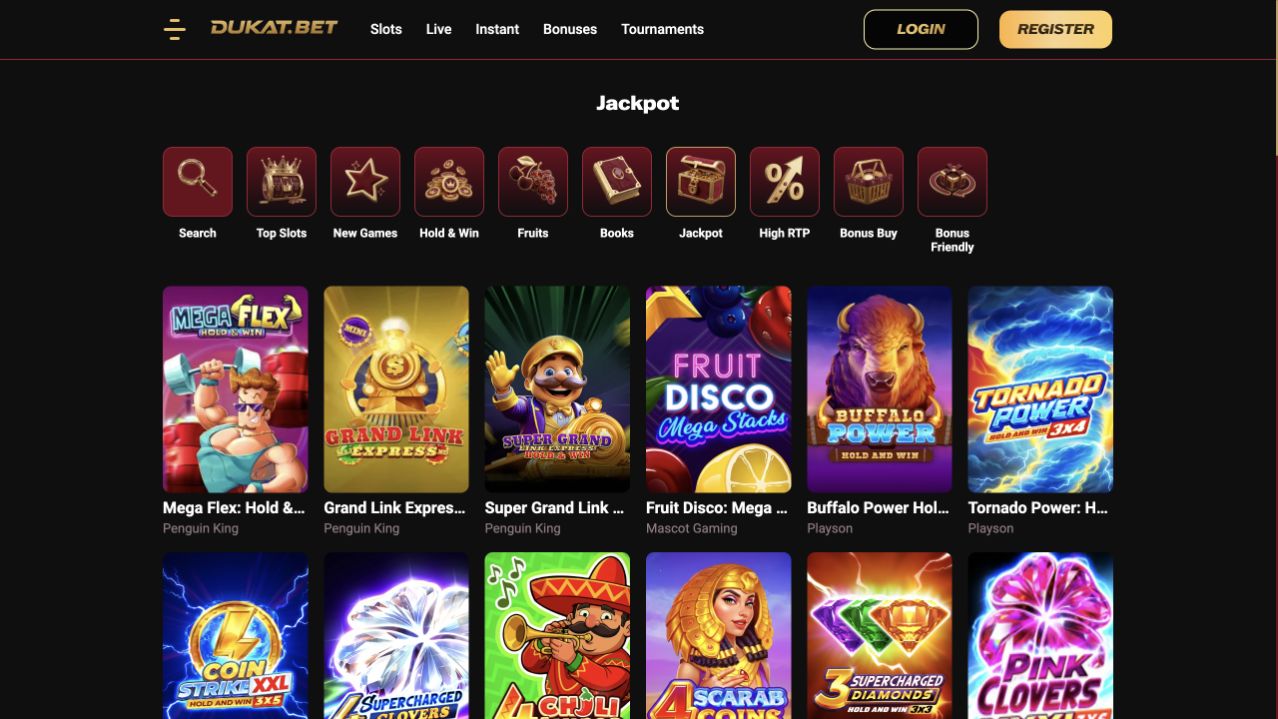
Use the title and provider together to identify a game. Open its help panel for the active RTP, stake range and feature rules; the catalogue thumbnail does not provide these details.
An active casino bonus introduces another ruleset
A game can offer a feature purchase while the account's promotion restricts that activity. The operator's maximum-bet definition can include purchased features, so a low base stake does not automatically keep the action within the promotional limit. Check both the game rules and the selected reward's terms.
The Dukat catalogue includes a Bonus Buy browsing route. That confirms a category, not permission to buy every listed feature with every balance. Compare the total cost with your existing budget before proceeding, and do not use a purchase as a way to recover earlier losses. The slots and wagering guides explain the surrounding catalogue and bonus concepts.
Compare ordinary rounds with the full purchase price
A hypothetical €20 feature entry can cost as much as one hundred ordinary €0.20 rounds. That equality is a cost comparison only: it does not mean the two choices have equal outcome distributions or identical entertainment duration. The purchased feature may finish quickly. Decide whether the whole charge fits the planned session before pressing the confirmation control.
A purchase menu may offer several tiers, each changing different starting conditions. The most expensive tier is not automatically the best value, and a dramatic feature name is not evidence of a favourable RTP. Identify what is guaranteed at entry and what remains random. If the help panel separates normal play, enhanced spins and purchased modes, keep those statistics separate in your comparison instead of combining their most attractive figures.
A changing reel layout changes the combinations
Megaways is associated with a variable number of symbols on the reels. The number of possible winning ways depends on the layout of that particular spin. A headline such as 117,649 ways describes a possible configuration in a game that supports it; it is not the number of guaranteed winning combinations or a promise that the maximum appears on every round. Individual titles use their own reel arrangements and rules.
Winning combinations commonly require matching symbols on successive reels starting from the left, but the game's paytable is the authority for the actual direction, minimum sequence and exceptions. Scatter symbols can follow a separate rule. Do not import the rules of a familiar fixed-payline slot into a new Megaways title merely because both show five or six reels.
Cascades and multipliers are separate features
Some Megaways games remove winning symbols and replace them with new ones. This can create another evaluation within the same paid round. The sequence ends according to the game's rules, usually when no further qualifying win occurs. A cascade does not mean a new deposit or another welcome-bonus spin; it belongs to the mechanics of the title being played.
Check whether a multiplier applies to one combination, one cascade or the entire feature. Also check whether it resets at the next ordinary spin. A multiplier shown in free spins may behave differently from its counterpart in the base game. The screen can show many moving numbers, but the relevant cost remains the total stake charged for the round.
Read the amount as a ceiling, then identify the qualifying deposit and expiry. The headline is not a balance you can withdraw immediately.
How to compare a title in the Dukat catalogue
Use the title and provider together when searching. A Megaways edition can have a different paytable, feature purchase, volatility and RTP from the original game with a similar name. Our slots directory explains how to read a catalogue, while the RTP guide explains why a published manufacturer figure is not proof of the configuration loaded in an operator account.
Before playing, find the stake controls, help panel, symbol values and feature rules. If the interface offers a higher-cost option, establish its final price first. More winning ways do not, on their own, mean a better return or a less variable session. Choose a comprehensible game and a predetermined spending limit rather than treating the largest displayed ways counter as a ranking of value.
Start with the trigger and the reset rule
Hold & Win commonly describes a feature in which qualifying symbols remain in position while other positions can receive further symbols. A respin counter limits the sequence. In many titles a new qualifying symbol resets that counter, but the precise reset condition and number of attempts vary. Read those details before assuming that every coin landing extends the feature.
The Dukat catalogue has a dedicated Hold & Win route. Visible examples include Coin Strike and several coin-themed games from Playson. A category label helps discovery; it does not establish that these games share one mathematical model. Titles can differ in reel size, minimum trigger count, additional collection actions and the way feature values are calculated.
A coin value can mean a multiplier rather than cash
Determine whether each displayed value is an amount in the account currency or a multiple of the stake. For example, a hypothetical 20x symbol at a €0.20 stake represents €4 if the rules define it as twenty times the total stake. That example is arithmetic, not a quoted prize or a current Dukat game outcome. Some interfaces update values when the stake changes.
Labels such as Mini, Minor, Major and Grand need a definition in the paytable. A fixed stake multiplier differs from a progressive prize pool. A large named prize on a promotional tile does not prove that every stake level or every mode can receive it. Check the collection condition and any required full-screen or special-symbol trigger.
Separate gameplay features from account rewards
The word bonus on a game screen usually describes an internal feature. It does not necessarily mean that the operator has credited promotional cash. The game feature may be paid from an ordinary real-money spin, whereas a casino welcome reward has its own activation, expiry and wagering rules. The two systems can interact without being interchangeable.
When comparing a Hold & Win title, note the ordinary spin price, possible enhanced-cost option, feature trigger and current rules-panel RTP. Do not infer low volatility from the fact that some symbols remain visible. A locked position records progress inside a feature; it is not a guarantee of a profitable session. Our volatility and bonus-buy pages explain the separate questions of outcome variation and paid feature entry. Current reference: open the game lobby.
| Game | RTP | Volatility |
|---|---|---|
| Wanted Dead or a Wild | 96.38% | 4 / 5 |
| RIP City | 96.22% | 3 / 5 |
| Le Bandit | 96.34% | 3 / 5 |
| Chaos Crew | 96.3% | 5 / 5 |
| Dead or Alive 2 | 96.8% | High |
| Starburst | 96.08% | Not confirmed |
| Gonzo’s Quest | 95.97% | Not confirmed |